An Interview with K.R. Jones
Step inside the eerie halls of The Institute of Lost Souls and discover the story behind one of the darkest, most haunting novellas of the year. In this exclusive interview, author K.R. Jones opens the door to the twisted world they’ve created—a place where science and suffering collide, and where the line between sanity and madness is disturbingly thin.
From inspiration drawn from real-life asylums to the themes of forgotten voices and psychological torment, this conversation delves deep into what makes The Institute of Lost Souls a chilling and unforgettable read. Whether you’re a fan of historical horror, psychological thrillers, or simply love a good scare, this is one interview you won’t want to miss.
Let’s peel back the bandages and look at the mind behind the madness . . .

What inspired you to write ‘The Institute of Lost Souls’? Was there a specific historical detail or personal interest that sparked the idea?
The Institute of Lost Souls was inspired by my fascination with abandoned history, forgotten people, and the dark truths that linger behind closed doors, particularly within the walls of psychiatric institutions from the early 20th century. I’ve always been drawn to the eerie silence of old asylums, not for the cheap scares but for the real, human stories buried under layers of dust, trauma, and neglect.
One particular spark came from researching early lobotomy practices — specifically the disturbing rise of the transorbital lobotomy, often dubbed the “ice pick lobotomy,” during the 1940s and 50s. The idea that someone could be rendered docile, “cured,” or even erased with a single, crude procedure both horrified and intrigued me. What’s more terrifying is how commonplace it became, how it was used to control not only the mentally ill, but often women, people with learning difficulties, or those who didn’t conform to societal norms.
But beyond the medical horror, I was deeply interested in the souls lost in these places — the patients whose voices were never recorded, whose stories were dismissed as madness, and whose suffering became institutional routine. The Institute of Lost Souls was born out of a desire to give a voice to those forgotten lives, albeit through a fictional and horrifying lens. I wanted to craft a story that felt like peeling wallpaper in a crumbling ward — something that reveals deeper layers of pain and secrecy the more you look.
There’s also a personal thread that ties into it. I’ve long been fascinated with the question of identity — what defines us, and how easily that identity can be stripped away when others control the narrative. Writing this novella became a form of psychological exploration for me, a way of stepping into the shoes of someone trapped not just by walls, but by perception.
Ultimately, I think horror is at its most powerful when it feels uncomfortably close to the truth — and this story sits right on that razor’s edge.
The story dives into the disturbing history of lobotomies and mental institutions. How much research did you do, and what shocked you the most during that process?
I immersed myself in the research for The Institute of Lost Souls long before I even realised I was writing a horror story. What began as casual curiosity quickly spiralled into something darker and more disturbing than I anticipated. I read medical journals, survivor accounts, transcripts of psychiatric interviews from the 1940s, and old asylum blueprints, trying to piece together not just what these places were but also what it felt like to exist inside.
One of the most shocking things I discovered was how easily someone could be committed, especially women. Sometimes, all it took was a husband’s word, a bout of grief, or an “unruly” attitude. Women were institutionalised for things like “hysteria,” postnatal depression, or simply being “too emotional.” These weren’t diagnoses as we understand them today — they were labels used to silence people. And once inside, they were often subject to horrifying treatments without consent.
The lobotomy, in particular, was chilling. It was performed as casually as a check-up in many institutions, especially the transorbital kind, which could be done in under ten minutes with minimal equipment. One of the most horrifying details I learned was that Dr. Walter Freeman, the American neurologist who popularised the ice pick lobotomy, would sometimes perform multiple procedures in a single day, travelling from hospital to hospital like a salesman. He even gave public demonstrations. The dehumanisation of it — the mechanical nature of a treatment that altered someone’s personality forever — still unsettles me.
But what haunted me most were the silences. The lack of names. The “unidentified female patient” in countless medical records. The fact that so many of these individuals were buried in unmarked graves, forgotten by the very world that locked them away. That realisation — that history is full of vanished people whose suffering never made the history books — became the emotional backbone of this story.
So, while I researched the procedures and institutional structures, I always asked the same question: What did it feel like to be a patient who never had a voice? That question shaped Eleanor’s story—and it stayed with me long after I wrote the final line.
Eleanor Hayes is a tragic but powerful character. How did her voice come to you, and what made you want to tell her story?
Eleanor came to me not as a fully-formed character, but as a whisper — like a breath from the past. I didn’t see her face at first or even know her name. I heard her silence — a silence that wasn’t peaceful, but heavy with everything left unsaid. The more I explored the concept of mental institutions and lobotomies, the more I started to sense her there, in the background, watching and waiting to be heard.
She’s a product of an era that punished emotion, silenced women, and pathologised independence. But she’s also so much more than that. Without giving too much away, I didn’t want Eleanor to be a passive character who suffers for the sake of horror — I wanted her to fight in whatever way she could, even if it was internal, quiet, or tragic. Her strength lies in her ability to retain fragments of herself in a system designed to erase those like her . . . women.
I think Eleanor represents all those who’ve been institutionalised, stigmatised, or dismissed because they didn’t fit a rigid societal mould. Her voice carries the echoes of real people — especially women — whose pain was brushed aside, whose stories were never told, or who were reduced to a diagnosis in a file. Writing her gave me a sense of responsibility, but also purpose. She is not a scream. She is the silence after the scream — and that, to me, is what made her so compelling.
Her story had to be told, not just for the horror, but to honour the quiet resistance that so many lived and died with.
The novella has a hauntingly gothic and claustrophobic atmosphere. How did you approach building such a vivid, unsettling setting?
Atmosphere is everything in horror, especially gothic horror. For The Institute of Lost Souls, I wanted the setting to feel like a character in its own right: cold, watchful, and quietly rotting from the inside. The goal wasn’t just to describe a creepy place, but to make readers feel trapped there with Eleanor and the patients, as if the walls themselves were closing in.
To build that kind of atmosphere, I focused on sensory detail—not just what Eleanor sees but what she hears, smells, and physically experiences. I wanted everything to feel slightly off, like a reality distorted just enough to make you uneasy. The way the damp clings to her skin. The groan of pipes in the walls. The acrid scent of disinfectant masking something worse.
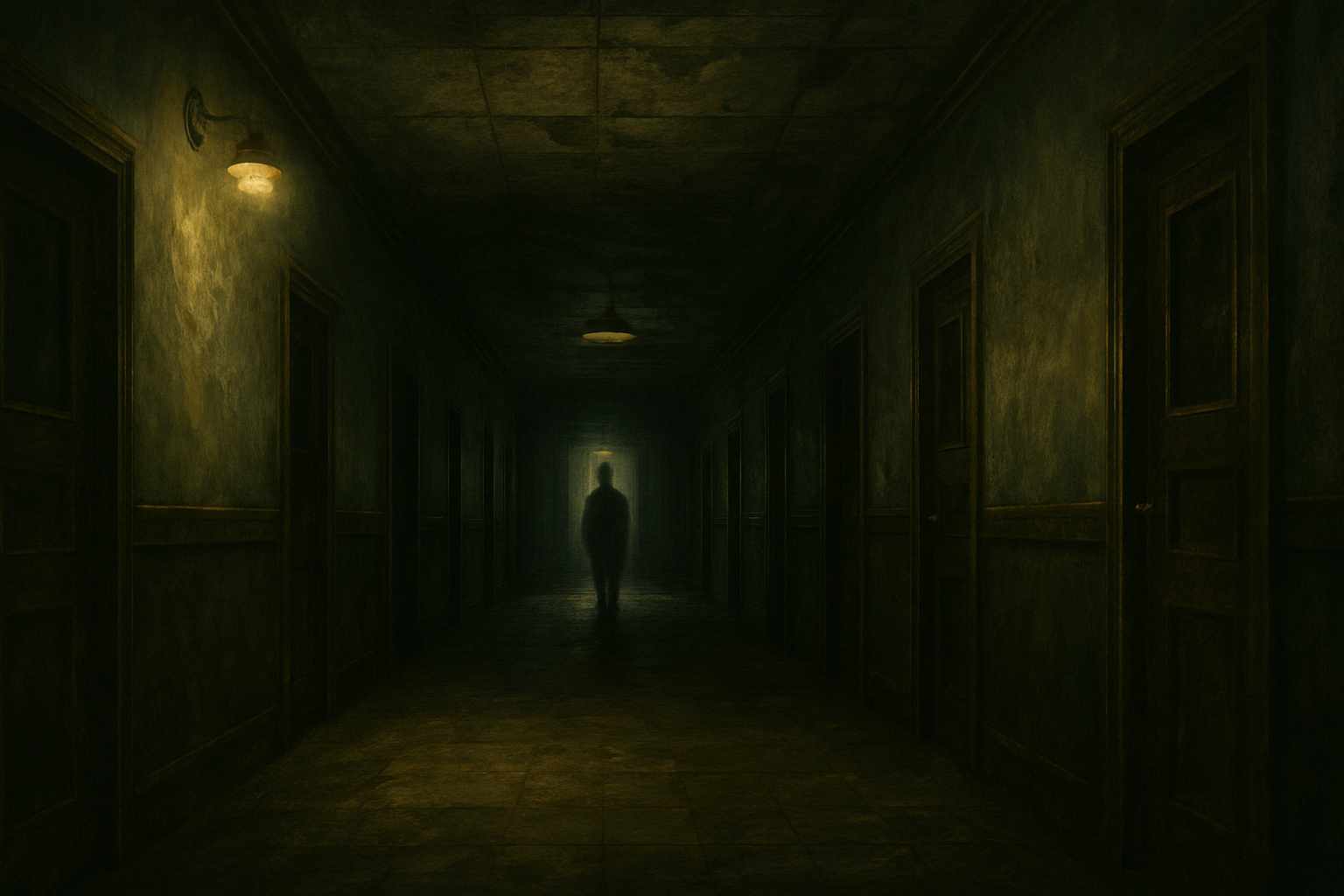
The architecture of Blackwood Institute also plays into the gothic tradition: long, echoing corridors, sealed-off wings, locked doors, strange medical instruments, and rooms no one talks about. But I didn’t want to rely solely on gothic tropes—I wanted the horror to feel institutional, cold, and bureaucratic. The horror wasn’t just in the building, but the system that made it possible. That meant creating a setting where the true terror comes not from ghosts but from routine, silence, and control.
One of my favourite tools was stillness — the eerie calm between moments of tension. Letting a hallway stretch too long and allowing a nurse to hold eye contact for a second too long. Those moments where nothing is explicitly happening, but you can feel that something isn’t right — those became the backbone of the novella’s claustrophobia.
I also drew on real-life photographs of abandoned asylums and sanatoriums. Those images have a haunting beauty — rusted bed frames, peeling paint, and collapsed ceilings with rays of light cutting through the dust. That decayed elegance became part of Blackwood’s DNA. It was important to me that the setting didn’t scream horror but whispered it through every crack and creak.
Ultimately, the setting had to reflect Eleanor’s mental state. As she becomes more trapped and unsure of what’s real, the institute seems to change, growing darker, more suffocating, and more surreal. That blurred line between environment and emotion is where the real horror lies.
There’s a very thin line between horror and history in this book. How do you balance fact and fiction when writing something so dark and grounded?
That line between horror and history is one I tread very carefully — and intentionally — in The Institute of Lost Souls. Because in many ways, the real history is far more terrifying than anything I could invent. Lobotomies, forced institutionalisation, medical abuse under the guise of care — these things happened. And they didn’t just happen in the shadows — they were sanctioned and celebrated under the banner of progress. So when I began writing, my approach was never to sensationalise what had been done, but to echo it — to reflect it through the lens of gothic fiction in a way that honours the pain, rather than exploits it. I rooted the story in truth: the procedures, the attitudes, the institutional structures — those were all pulled from historical sources. But I wove in fictional elements like Blackwood Institute, Eleanor’s journey, and the creeping atmosphere to explore what history often leaves unsaid: the emotional, human horror.
The balance came down to asking myself two key questions at every stage:
- Is this grounded in emotional truth?
- Am I respecting the real people who lived through these experiences?
Fiction allowed me to explore the interior — what it might feel like to be trapped in a system that doesn’t see you as a person. History tells us how lobotomies were performed, who pioneered them, and how many lives they claimed. But fiction lets us sit beside someone in that chair. It allows us to hear the quiet before the procedure. The scraping of metal. The breath that might be her last as herself. That’s where horror becomes empathy.
What shocked me most in my research was how often these procedures were presented as hopeful and humane. The horror wasn’t in some sadistic villain twirling a scalpel—it was in the cold, clinical detachment of doctors who truly believed they were helping. That’s the most terrifying kind of horror: the one that wears a white coat and smiles.
So, I used fiction to illuminate the shadows history glosses over. In doing so, I hoped to create a story that feels intimate, unsettling, and, sadly, all too believable.
Was writing this story emotionally difficult, especially given the themes of mental health, control, and institutional abuse?
Yes — in many ways, writing The Institute of Lost Souls was one of the most emotionally intense experiences I’ve had as an author. I knew from the beginning that the themes I was exploring — mental health, forced silence, loss of autonomy, institutional control — carried real weight, and I felt a deep responsibility to approach them with honesty, sensitivity, and care.
There were moments, particularly during Eleanor’s descent into the institution’s grasp, where I had to step away from the page and just breathe. Not because the horror was too graphic, but because it was quietly, psychologically devastating. The way a person could be broken down piece by piece, made to question their own thoughts, stripped of identity until all that’s left is compliance — that kind of horror cuts deep. It’s not theatrical. It’s intimate. And in that intimacy lies the real fear.
But what made this story even more personal — and more difficult — was the connection it had to my own life. I live with bipolar disorder. And as I researched the history of psychiatric care, especially in the early to mid-20th century, I came to a harrowing realisation: if I had been born in that era, I could have been a patient at a place like Blackwood. I might have been labelled “unstable,” “hysterical,” or “dangerous,” and subjected to the very treatments I now write about with horror. A diagnosis like mine would have been misunderstood, feared, and likely “treated” with something as final and violating as a lobotomy. That knowledge didn’t just inform the story — it haunted it. Writing Eleanor’s journey often felt like writing a version of myself in a world that had no compassion, only control. It forced me to look inward and confront how fragile agency can be, and how quickly humanity can be stripped away under the guise of care.
And yet, I found something powerful in that too. Eleanor’s refusal to be erased — her quiet fight to remember who she is — became a reflection of the resilience so many of us carry, especially those living with mental health conditions. Her story is fictional, but the emotions are real. The fear, the isolation, the fight to hold on to your truth — those are battles people still face today, even in more modern settings.
So yes, writing this was emotionally difficult. But it was also incredibly important to me. Because horror, when it’s honest, doesn’t just scare us — it helps us confront the parts of ourselves and our history that we’re often too afraid to face. And in doing that, it can give voice to those who were once silenced — and help make sure we never forget them.
What message or feeling do you hope readers walk away with after finishing The Institute of Lost Souls?
More than anything, I hope readers walk away with a sense of lingering unease — not just because of the horror elements, but because of how closely the story brushes against real history, real injustice, and real people who were forgotten. I want that discomfort to settle in slowly, like dust in the corners of an abandoned room — something they can’t quite shake. Because the true horror of this story isn’t the screams or the shadows . . . it’s the silence that followed. It’s the lives erased, the minds altered, and the systems that allowed it all to happen under the label of “care.”
But beyond that unease, I also hope readers carry a sense of empathy. Eleanor might be fictional, but her experience echoes the voices of so many who were silenced, especially those struggling with mental illness in times and places where understanding simply didn’t exist.
As someone who lives with bipolar disorder, this story is deeply personal. Writing it forced me to confront a terrifying truth: that in another era, I might have been institutionalised. I might have been lobotomised. I might have been one of the names lost to time in a dusty, forgotten file. So I hope readers leave the story not only haunted by the setting, but haunted by the thought of how easily this could have been reality for people like me — and for so many others who were deemed “too much,” “too emotional,” or simply “inconvenient.”
If the story does its job, readers will look at the world a little differently afterward. They’ll question how far we’ve really come. They’ll think twice about what it means to be labelled. And perhaps they’ll feel a renewed respect for the strength it takes to hold on to your identity when everything is trying to take it from you. And if nothing else . . . I hope they remember Eleanor. Because no one should be forgotten — ever!
Were there any scenes you found particularly disturbing or powerful to write? Can you share a moment from the book that still lingers with you?
Yes — there’s one scene in particular that still stays with me, and I don’t think it ever will fully leave. It’s the moment Eleanor sees the lobotomy chair up close for the first time — that rusted, blood-stained relic of “treatment” sitting silently in the shadows. There’s no jump scare. No sudden movement. Just the unbearable weight of that chair being there — of what it represents, and what’s already been done with it. Writing that moment was deeply disturbing, not just because of what it foreshadows for Eleanor, but because of what it remembered for me. That chair is based on real ones I saw in photographs while researching — chairs that were bolted to floors, surrounded by worn straps, next to trays of crude tools. Cold metal. Bloodstains that never washed out. That single image embodied the quiet, systemic cruelty of those institutions.
But what made the scene so powerful to write was Eleanor’s reaction. It’s not panic — it’s a quiet, overwhelming dread. The kind where your body knows something terrible is coming before your mind can form the words. That kind of fear is harder to write than screaming — it’s still, internal, paralysing. And as someone who has lived with mental illness, that scene hit close to home. Because in another time, that chair could’ve had my name on it. It’s about being completely at the mercy of a system that never intended to understand you. And for me, that’s the most terrifying horror of all — one rooted not in monsters, but in silence, control, and the cold confidence of people who believed they were doing the right thing.
Finally—do you believe there are places like Blackwood Institute still hiding secrets today?
Yes. Maybe not in the exact same form as Blackwood Institute, but I do believe that shadows of places like it still exist — not just physically, but systemically. The buildings may have been repurposed or torn down, but the legacy of institutions like Blackwood lives on in how we continue to misunderstand, mishandle, and at times even fear mental illness. There are still places where people are silenced, ignored, and medicated into compliance rather than supported with compassion. There are still systems — both formal and societal — that strip autonomy from the vulnerable under the guise of “what’s best for them.” And there are still too many stories that go untold, too many lives labelled “unreliable” and therefore dismissed. That’s the chilling truth: we’ve made progress, but not nearly as much as we like to believe.
Writing The Institute of Lost Souls wasn’t just about capturing a past horror — it was about holding up a mirror to the present. Because institutions, in one form or another, still exist. Stigma still exists. And there are still people — real people — who fall through the cracks, who are never truly seen or heard.
So yes, I believe the spirit of Blackwood is still out there. Maybe not behind rusted gates or padded walls, but in bureaucracy, in silence, and in the lingering idea that some lives are more “manageable” when they’re quiet. That’s the kind of horror that doesn’t end with a scream. It ends with forgetting. And stories like this one exist to make sure we don’t.